


© 2026 Klim GmbH
CZ
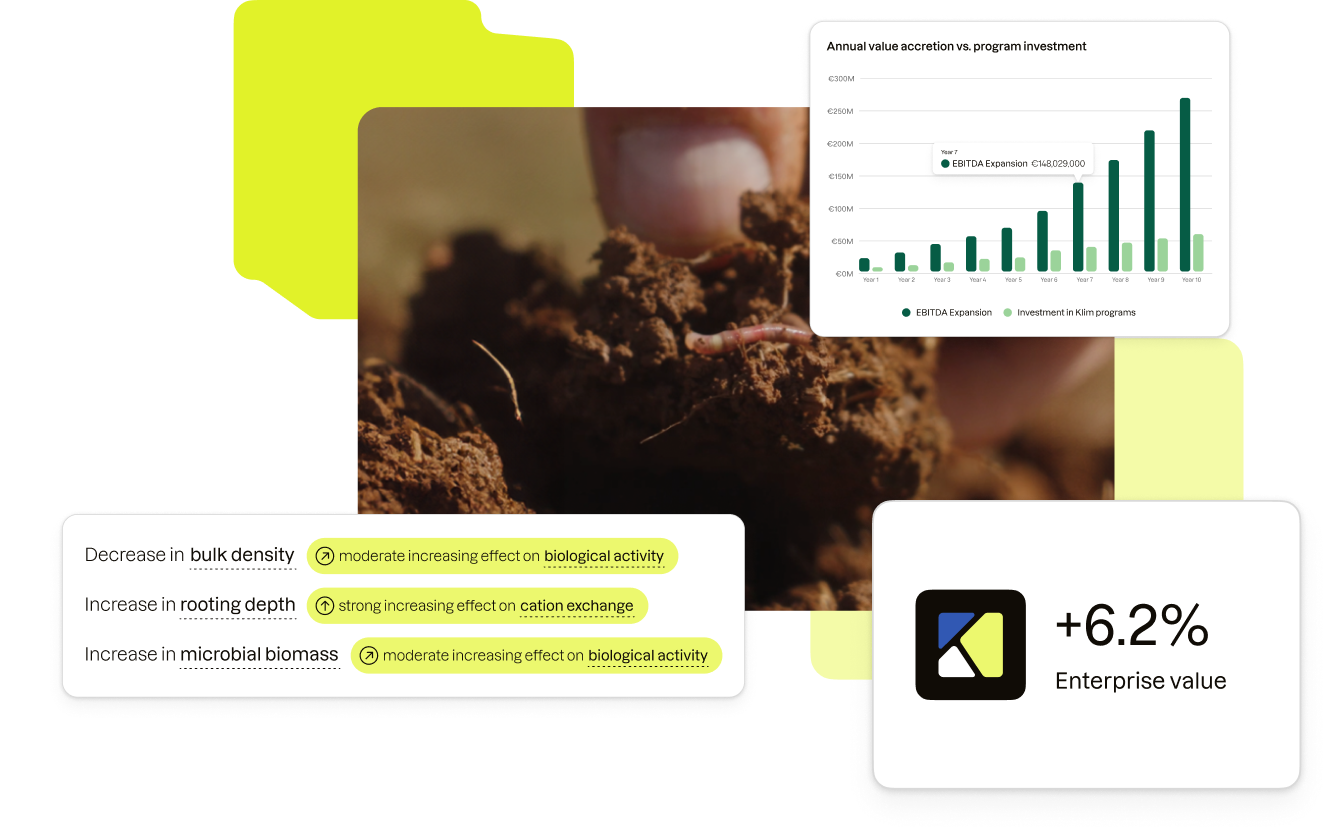
Quantify the business impact of your regenerative agriculture investments with Klim’s Soil-to-Value model.
Klim partners






The question behind every regenerative agriculture investment:
Where’s the business value?
Supply chain risk starts in the soil, but its business impact comes later. Most companies miss the signal.
Klim’s Soil-to-Value makes that connection visible.
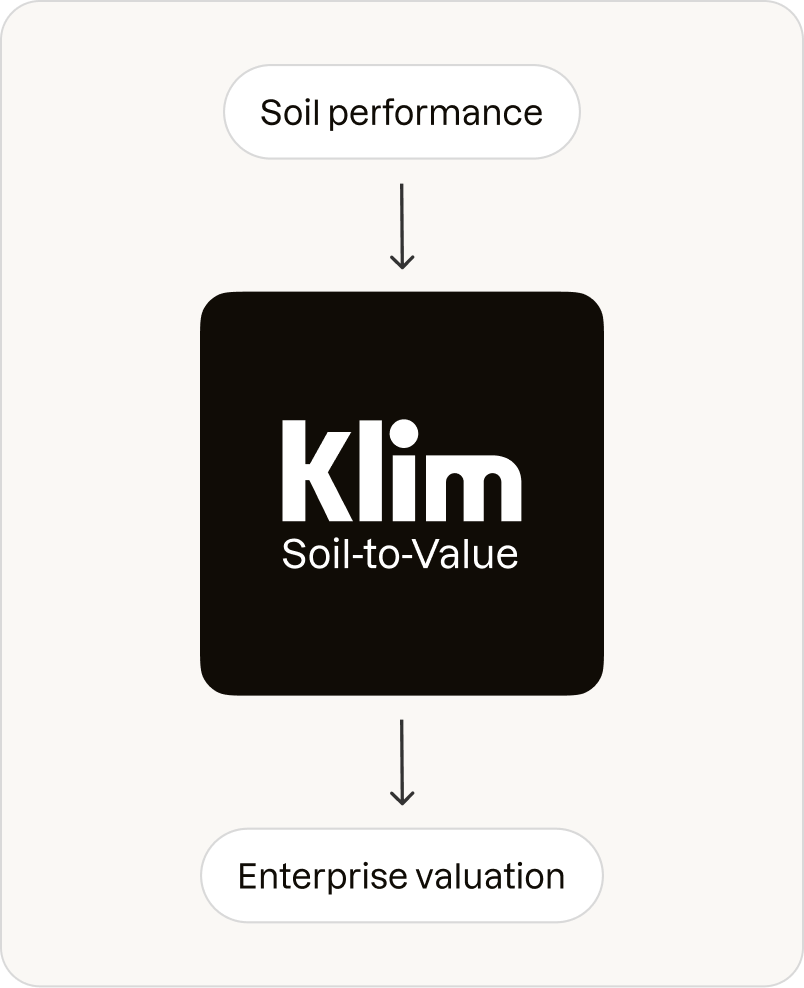
Turn soil performance into business value
Soil-to-Value connects soil science with corporate finance across key business drivers such as risk, cost, and return. So you can quantify the impact of regenerative agriculture investments on company value.
Risk
Cut supply risk before it hits your P&L
Improve decision-making with earlier signals on where upstream instability could affect cost, planning, and performance.
Input resilience
Supply stability
Compliance
Cost
Protect margins from volatility
Create more stable operating conditions across sourcing, input pressure, and short-term cost swings.
Predictable margins
Lower operational costs
Less hedging pressure
Return
Size & capture upside early
Translate regenerative sourcing into measurable business value across cost efficiency, performance, and return.
Competitive differentiation
Planning confidence

How Soil-to-Value works
A first-of-its-kind approach connecting soil science and corporate finance modelling.
1
Start with the soil
We build a primary, field-level baseline and model how regenerative practices improve soil function, crop resilience, and input efficiency over time.
2
Connect soil to your business
Soil-to-Value pairs soil science with your business priorities, supply chain data, and a tailored risk model.

3
Quantify the impact
You get a scenario-based view of how regenerative investment compounds: EBITDA expansion, risk reduction, and enterprise value uplift.
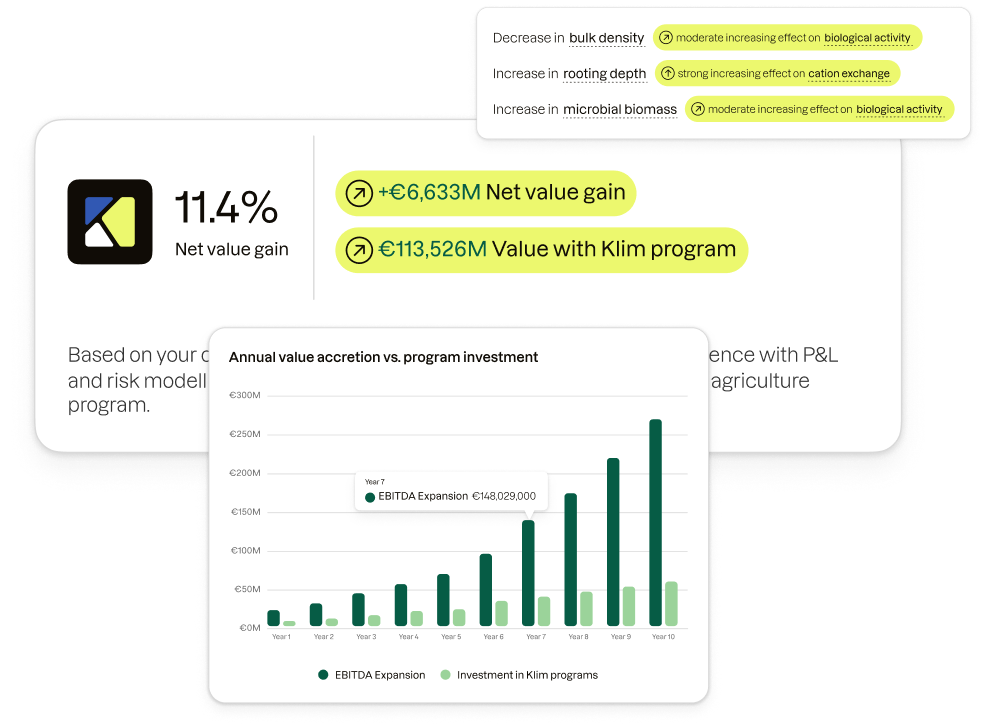
One business case that brings all functions together
Soil-to-Value brings teams together around a shared view of the business value of regenerative agriculture,
while giving each team the context it needs to make decisions.
while giving each team the context it needs to make decisions.
Finance & strategy teams
Sustainability leaders
Procurement teams
Agriculture teams
What’s the value of regenerative agriculture to your business?
Request a free working session with Klim experts to learn how to get a personalised Soil-to-Value assessment.
Oops! Something went wrong while submitting the form.


%201.png)