
Carbon credits for companies
Invest in soil carbon sequestration through regional carbon credits
Carbon credits from Germany
Guaranteed traceability
Promotion of soil health and biodiversity
Talk with an expert
Supported by:






Carbon credits from your region

Klim develops climate protection projects and provides high-quality carbon credits from Germany.
We support and advise farmers in adopting regenerative practices that sequester carbon in the soil and reduce CO₂ emissions.
Companies can drive this transition by purchasing carbon credits, which fosters soil health, biodiversity, and a more resilient agricultural system.
We would be happy to help you integrate carbon credits into your sustainability strategy.
Talk with an expert
Why carbon credits?
Carbon credits are a key element of modern climate protection strategies, allowing companies to actively support climate initiatives. We focus on contribution-based carbon credits. Our clients fund high-impact, local regenerative agriculture projects - not to offset emissions one-to-one, but to contribute meaningfully to climate action.

Regeneration
Carbon credits allow companies to fund climate protection projects while also generating important co-benefits. For example, they can contribute to environmental restoration on both regional and global scales.
Reporting
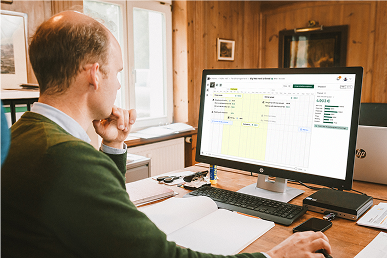
Purchasing carbon credits reflects a company's climate commitment to sustainability. These investments can enhance sustainability reports, improve ESG ratings, and increase appeal to investors and stakeholders.

Risk avoidance
New EU sustainability directives are pressuring companies to set clear goals and report progress transparently. Our experts ensure accurate carbon credit reporting and help mitigate communication risks.
Talk with an expert
Regenerative practices bring many benefits
Carbon capture
Healthy soil acts as a "carbon sponge," storing CO₂ from the atmosphere in the soil.

Biodiversity
Soil biodiversity supports pollinators and increases ecosystem resilience.

Water retention
Porous soils retain water, protecting crops from extreme weather.

Creating impact together with Klim
1. Set your scope
In conversation with our carbon market experts, you will develop a strategy for achieving your climate goals and select the region in which farmers are to be supported.
2. Drive impact
Klim's carbon credits support farmers in implementing regenerative practices that reduce emissions and bind carbon.
Talk with an expert
Food for thought
50 %
of soil's organic carbon has been lost globally on average
This requires urgent action to bring carbon back in the soil and counteract climate change by implementing regenerative practices.
Carbon credits for companies
Purchase carbon credits from Klim
Your investment directly funds farmer’s implementation of regenerative agriculture practices.
€50 / credit
One carbon credit corresponds to one tonne of CO₂ reduction or sequestration
High-quality carbon credits made in Germany
Close project collaboration with Klim and farmers
Unique storytelling opportunity through on-site visits
Guaranteed transparency and traceability
Validated certification process
Reliable data from Klim's digital platform
Talk with an expert
Two paths to your sustainability goals
We offer removal and reduction carbon credits for your company.
Removal

Klim Removal Credits
These carbon credits are generated by sequestering carbon in the soil.Farmers introduce improved crop rotations and use organic fertilisers.
Reduction
Klim Reduction Credits
These carbon credits are generated during the cultivation of agricultural fields. Farmers reduce the use of nitrogen fertilisers, minimise the use of pesticides and reduce intensive tillage.

Klim's carbon credits registry
Both credits are:
TÜV-validated according to DIN ISO 14064.2
TÜV certification under DIN ISO 14064.2 ensures that our project complies with international standards for quantifying and reporting emission reductions.
Type: Ex post
Refers to carbon credits that are issued after the emission reductions have been achieved and verified.
Vintage: From 2024 onwards
Indicates the year in which the emission reductions were achieved.
Suitable for CSRD reporting
The Corporate Sustainability Reporting Directive (CSRD) is an EU regulation that requires companies to report on their sustainability and environmental impact.
We will be happy to advise you on the differences and advantages of our carbon credits.
Talk with an expert


Carbon credits can be purchased directly through Klim or from our partners' portfolio:


On-site visit
Out of office
We offer regular farm visits for you and your team.
Learn how soils become carbon sinks, explained directly in the field by experts and farmers.
Get in touch

Klim in numbers
900k+
hectares registered on the Klim platform
4,000+
farmers registered on Klim's platform
2020
Klim's founding year
6
countries where Klim works with farmers
Ready to take the next step?
We offer a free consultation to identify the potential of Regenerative Agriculture for your company.

Ready for Klim carbon credits in your climate strategy?
Carbon credits can be purchased directly via Klim or as part of a portfolio. Our experts look forward to guiding you through the process.
Get in touch
Frequently asked questions about our carbon credits
What does a Klim carbon credit represent?
What is the difference between contribution and carbon offsetting?
Can companies use Klim carbon credits to claim they are carbon neutral or climate friendly?
How local are Klim's projects?
How are the climate benefits measured and verified?
How does Klim help companies support regenerative agriculture?
How can companies communicate their contribution to regenerative agriculture?